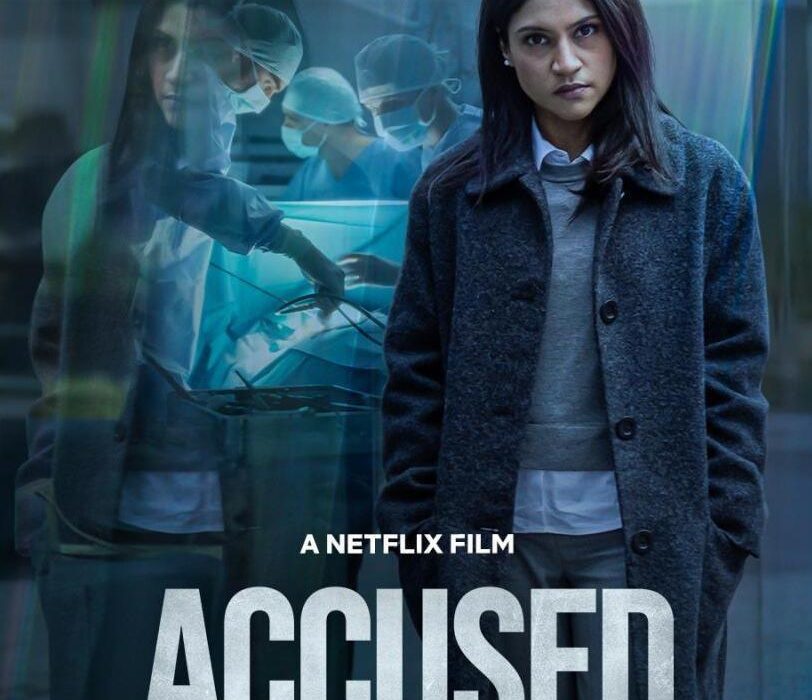
Accused (2026) Review: A Tense, Timely Thriller About Digital Mob Justice
Accused (2026) is a British thriller directed by Julian Jarrold that transforms the anxieties of the social media era into a tightly wound, claustrophobic drama. Starring Chaneil Kular, Lauryn Ajufo, Nitin Ganatra, and Frances Tomelty, the film explores how quickly online misinformation can escalate into real-world danger.
With a brisk runtime of 97 minutes, Accused strips away spectacle in favor of psychological tension, offering a sobering look at digital outrage, prejudice, and the fragility of truth.
Accused (2026) Movie Overview
| Title | Accused |
|---|---|
| Release Year | 2026 |
| Genre | Thriller, Drama |
| Director | Julian Jarrold |
| Runtime | 97 minutes |
| Country | United Kingdom |
| Language | English |
| Lead Cast | Chaneil Kular, Lauryn Ajufo, Nitin Ganatra, Frances Tomelty |
Full Plot Synopsis of Accused (2026)
The story unfolds in the aftermath of a deadly explosion in London. As authorities scramble to contain the crisis, social media platforms ignite with speculation and amateur detective work. A blurred image circulates online, and within hours, internet users begin identifying suspects.
Harri Bhavsar (Chaneil Kular), a young British-Indian student, is mistakenly tagged in viral posts linking him to the attack. The accusation is baseless — but in the digital age, virality often outruns verification.
What begins as online chatter quickly intensifies. Harri’s name trends. Influencers amplify the claim. Strangers flood his social media accounts with threats. Personal details are leaked. His address is exposed.
Confined to his family home during a citywide lockdown, Harri watches helplessly as the mob mentality escalates. His parents, played by Nitin Ganatra and Frances Tomelty, struggle to comprehend how a rumor can spiral into a life-threatening situation.
As night falls, the digital hostility morphs into physical danger. Radicalized vigilantes, convinced of Harri’s guilt, track him down. The film’s second half shifts into home-invasion territory, with Jarrold crafting sustained suspense from confined spaces and escalating fear.
The climax confronts both physical survival and moral reckoning. The film avoids neat resolutions, leaving audiences with lingering questions about accountability and the permanence of online damage.
Themes: Misinformation, Identity, and Digital Accountability
The Speed of Digital Judgment
One of the most striking elements of Accused (2026) is its portrayal of how misinformation spreads. The film shows how algorithms reward outrage and how collective anger can override logic. A single unverified post snowballs into a social verdict — without evidence or due process.
Prejudice and Assumption
Harri’s ethnicity adds another layer to the narrative. The film subtly highlights how bias influences suspicion. The public’s willingness to believe the accusation reflects broader societal anxieties and prejudices.
Isolation in a Connected World
Despite constant notifications, Harri is isolated. The phone becomes both a lifeline and a weapon. Sound design emphasizes this theme — message alerts and vibrations are used as suspense devices, signaling intrusion rather than connection.
The Consequences of Virality
Unlike traditional thrillers centered on a mastermind antagonist, Accused presents a decentralized villain: the crowd. Responsibility becomes diffused, making the moral questions more unsettling.
Performances and Character Analysis
Chaneil Kular as Harri Bhavsar
Kular carries the film almost single-handedly. His performance captures the psychological toll of public shaming and fear. Much of the tension depends on his physical presence — pacing hallways, staring at screens, bracing for impact. His portrayal is restrained yet emotionally resonant.
Lauryn Ajufo
Ajufo brings emotional grounding to the narrative. Her presence introduces moments of empathy that contrast sharply with the hostility outside.
Nitin Ganatra and Frances Tomelty
As Harri’s parents, Ganatra and Tomelty offer measured, understated performances. They embody confusion and fear, representing a generation less attuned to the mechanics of digital hysteria.
Direction and Cinematic Craft
Julian Jarrold adopts a minimalist style. The film unfolds largely within a single location, creating claustrophobia. Tight framing and handheld camerawork heighten immediacy.
Lighting shifts subtly from natural daylight to shadow-drenched interiors as tension escalates. The production design remains understated, emphasizing realism over spectacle.
The editing maintains a steady pace. There are no grand set pieces — instead, suspense emerges from anticipation. The simplicity of the filmmaking mirrors the simplicity of the premise: a rumor can destroy a life.
Screenplay and Narrative Structure
The screenplay unfolds in near real-time, which strengthens immersion. Dialogue feels naturalistic and often overlaps, mimicking the chaos of modern communication.
While the narrative is linear and focused, some viewers may find character backstories limited. The script prioritizes thematic urgency over deep exposition. This choice keeps the film lean but may leave certain emotional threads lightly sketched.
Strengths of Accused (2026)
-
Highly relevant subject matter
-
Strong lead performance from Chaneil Kular
-
Efficient runtime that avoids filler
-
Effective use of confined space to build tension
-
Sharp social commentary without heavy-handedness
Weaknesses of Accused (2026)
-
Limited secondary character development
-
Minimal visual variation due to single-location setting
-
Ambiguous ending may feel abrupt for some viewers
Why Accused (2026) Resonates Today
In an era where misinformation spreads within minutes, Accused feels immediate and unsettling. The film doesn’t rely on exaggerated scenarios; instead, it presents a plausible chain of events rooted in recognizable digital behavior.
The story serves as both thriller and cautionary tale. It reminds viewers that social media participation carries consequences — and that public accusation can be irreversible, even when proven false.
Final Verdict: Is Accused (2026) Worth Watching?
Accused (2026) is a compact yet impactful thriller that succeeds through tension and relevance rather than spectacle. Julian Jarrold crafts a focused narrative that confronts contemporary fears with restraint and urgency.
While its minimalist approach may not satisfy viewers seeking elaborate twists, it delivers a sobering examination of digital mob mentality and modern accountability.
For audiences interested in socially conscious thrillers, Accused is a compelling watch.
Rating: 4 out of 5