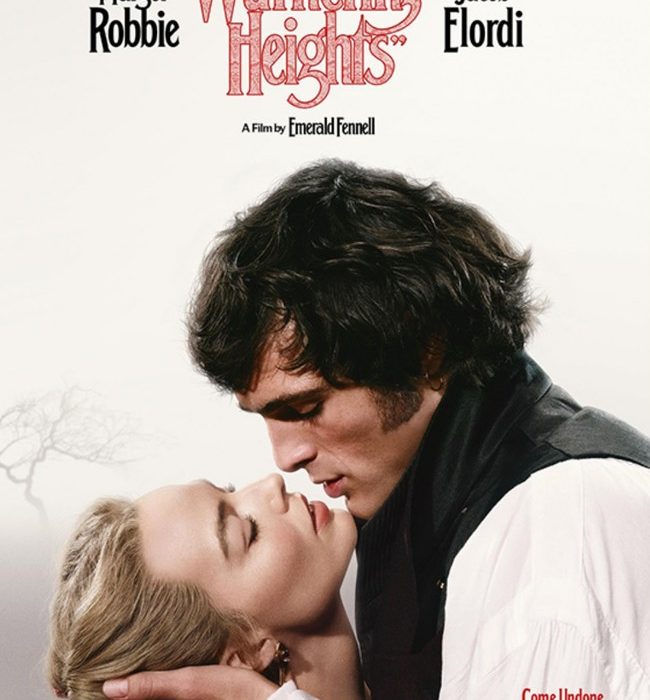
Wuthering Heights (2026) Review: Emerald Fennell’s Bold Gothic Romance Reimagines a Literary Classic
Wuthering Heights (2026) is a romantic gothic drama directed by Emerald Fennell, adapted from Emily Brontë’s landmark 1847 novel. Starring Margot Robbie as Catherine Earnshaw and Jacob Elordi as Heathcliff, the film revisits one of literature’s most destructive love stories with a heightened psychological lens and striking visual ambition.
With a runtime of approximately 130 minutes, this 2026 adaptation positions itself as a prestige literary drama aimed at both awards-season audiences and younger viewers discovering Brontë’s tempestuous romance for the first time.
Wuthering Heights (2026): Film Overview
| Category | Details |
|---|---|
| Title | Wuthering Heights |
| Release Year | 2026 |
| Genre | Romantic Drama, Gothic |
| Director | Emerald Fennell |
| Based On | Novel by Emily Brontë |
| Main Cast | Margot Robbie, Jacob Elordi |
| Runtime | Approx. 130 minutes |
| Language | English |
Full Plot Synopsis of Wuthering Heights (2026)
Set in the desolate Yorkshire moors during the early 19th century, Wuthering Heights (2026) chronicles the obsessive and ultimately tragic bond between Catherine Earnshaw and Heathcliff.
The narrative begins when Mr. Earnshaw brings home Heathcliff, a mysterious orphan, to live at Wuthering Heights. Catherine, his daughter, forms an immediate and intense connection with the outsider. Their relationship, forged in shared wildness and emotional defiance, grows into a passionate yet volatile attachment.
After Mr. Earnshaw’s death, Catherine’s brother Hindley inherits the estate and subjects Heathcliff to humiliation and degradation. As Heathcliff’s social standing declines, Catherine finds herself increasingly torn between her profound emotional connection to him and the allure of upward mobility through marriage.
Catherine ultimately chooses to marry Edgar Linton, a refined and wealthy neighbor from Thrushcross Grange. Her decision devastates Heathcliff, who disappears from the moors. Years later, he returns unexpectedly, now wealthy and hardened by bitterness.
What follows is a calculated campaign of revenge. Heathcliff manipulates Hindley, entangles himself in Edgar’s family, and perpetuates cycles of emotional cruelty that ripple into the next generation. Catherine, trapped between societal expectations and her unbreakable attachment to Heathcliff, spirals into physical and emotional decline.
Her death becomes the emotional apex of the story, but Heathcliff’s obsession refuses to fade. His fixation transcends mortality, transforming the windswept moors into a symbol of enduring torment. The younger generation eventually attempts to break free from inherited hatred, offering a restrained note of possible redemption in the film’s final act.
Direction and Vision: Emerald Fennell’s Gothic Interpretation
Emerald Fennell brings a distinctive stylistic approach to Wuthering Heights (2026). Rather than treating the material as a restrained period drama, she emphasizes its psychological volatility and emotional extremity.
Fennell’s direction leans into contrasts:
-
Stark, windswept exteriors versus claustrophobic interiors
-
Lyrical quiet moments punctuated by explosive confrontations
-
Romantic longing intertwined with emotional brutality
The film avoids sanitizing the darker aspects of Brontë’s novel. Instead, it underscores the toxicity embedded within Catherine and Heathcliff’s bond, presenting their love not as idealized passion but as destructive obsession shaped by class resentment and emotional deprivation.
Performances: Margot Robbie and Jacob Elordi Lead the Storm
Margot Robbie as Catherine Earnshaw
Margot Robbie delivers one of her most emotionally layered performances in recent years. Her Catherine is restless, impulsive, and deeply conflicted. Robbie captures both the character’s magnetic charisma and her self-destructive indecision.
In quieter scenes, she conveys Catherine’s inner fragmentation through subtle gestures and vocal restraint. During moments of emotional collapse, her performance shifts into raw vulnerability, making the character’s psychological unraveling palpable.
Jacob Elordi as Heathcliff
Jacob Elordi’s Heathcliff is brooding and controlled, marked by simmering resentment. He avoids overt theatricality, instead allowing stillness and gaze to communicate emotional depth.
His transformation—from vulnerable outsider to ruthless avenger—is portrayed with chilling conviction. Elordi’s performance emphasizes Heathcliff’s wounded pride and enduring fixation, ensuring the character remains unsettling yet tragically human.
Cinematography and Visual Aesthetic
The cinematography in Wuthering Heights (2026) plays a central role in shaping its atmosphere. The Yorkshire moors are presented not merely as a backdrop but as a living embodiment of emotional turbulence.
Visual Strengths
-
Expansive landscape shots emphasizing isolation
-
Muted color palettes reflecting moral bleakness
-
Candlelit interiors that intensify intimacy and tension
The production design distinguishes sharply between the rough austerity of Wuthering Heights and the polished refinement of Thrushcross Grange, reinforcing themes of class division and aspiration.
Screenplay and Thematic Exploration
The screenplay condenses the novel’s complex framing narrative while maintaining its emotional core. By focusing primarily on Catherine and Heathcliff’s psychological interplay, the film ensures narrative cohesion.
Key Themes in Wuthering Heights (2026)
1. Obsession vs. Love
The film questions whether the central relationship is romantic or pathological.
2. Class and Social Mobility
Heathcliff’s marginalization fuels his lifelong resentment, shaping his moral descent.
3. Generational Trauma
The sins of one generation echo into the next, demonstrating how unresolved grief becomes inherited pain.
4. Nature as Emotional Mirror
The moors symbolize unrestrained passion and existential isolation.
Fennell’s interpretation situates these themes within a contemporary framework, making the narrative resonate with modern conversations about emotional dependency and power imbalance.
Strengths of Wuthering Heights (2026)
-
Compelling lead performances anchored by Robbie and Elordi
-
Striking cinematography that elevates the gothic atmosphere
-
Psychological depth that refreshes a familiar story
-
Strong directorial identity that distinguishes this adaptation from earlier versions
Weaknesses of the Film
-
The emotional intensity may feel relentless for some viewers
-
Secondary characters receive limited development due to narrative compression
-
The pacing occasionally lingers, potentially challenging mainstream audiences
Awards Prospects and Cultural Relevance
Given its literary pedigree, high-profile cast, and bold direction, Wuthering Heights (2026) positions itself as a major contender in awards categories such as:
-
Best Actress
-
Best Cinematography
-
Best Production Design
-
Best Adapted Screenplay
The film’s modern thematic framing also enhances its relevance for younger audiences engaging with classic literature through cinema.
Final Verdict: Is Wuthering Heights (2026) Worth Watching?
Wuthering Heights (2026) is an ambitious, visually immersive adaptation that refuses to soften the darkness at the heart of Emily Brontë’s novel. Emerald Fennell’s direction injects psychological urgency into a story often treated as mere tragic romance.
Margot Robbie and Jacob Elordi deliver powerful performances that capture the volatile chemistry of Catherine and Heathcliff. While its intense tone and deliberate pacing may divide audiences, the film stands as one of the most distinctive literary adaptations of the decade.
Rating: 4 out of 5 stars