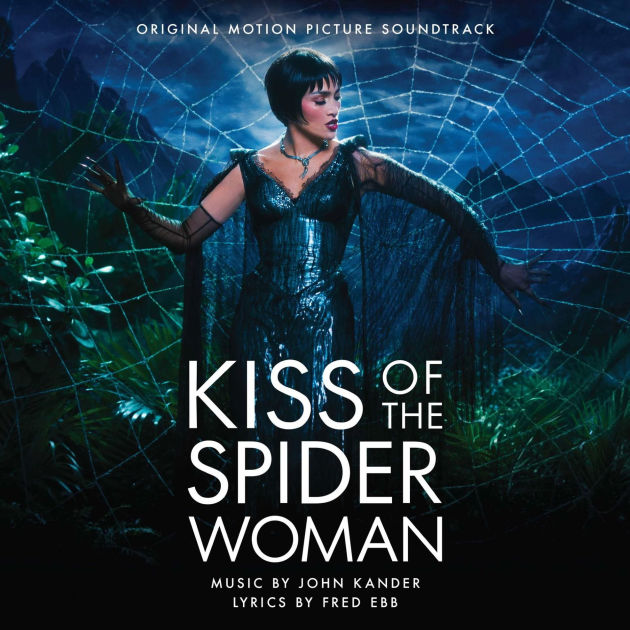
The Resilience of Fantasy: A Comprehensive Analysis of ‘Kiss of the Spider Woman’
The narrative of Kiss of the Spider Woman stands as one of the most enduring explorations of human connection, political defiance, and the transformative power of the arts. Originally a 1976 novel by Manuel Puig, the story has seen three major iterations: the Oscar-winning 1985 drama, a Tony-winning Broadway musical, and the 2025 film adaptation directed by Bill Condon.
Set against the harrowing backdrop of the Argentine military dictatorship, the story centers on the unlikely bond between two cellmates: Luis Molina, a queer window dresser, and Valentin Arregui, a Marxist revolutionary.
2025 Film Overview: A Technicolor Reimagining
The 2025 version, directed by Academy Award winner Bill Condon (Dreamgirls, Chicago), serves as a lavish adaptation of the 1993 stage musical. It bridges the gap between the gritty reality of political imprisonment and the escapist splendor of Golden Age Hollywood.
Film Production Details
| Feature | Details |
| Director | Bill Condon |
| Release Date | October 10, 2025 |
| Screenplay | Bill Condon (based on Terrence McNally and Manuel Puig) |
| Primary Cast | Jennifer Lopez, Diego Luna, Tonatiuh |
| Runtime | 128 Minutes |
| Genre | Musical / Drama / Fantasy |
| Cinematography | Tobias Schliessler |
Full Plot Synopsis
In 1983, during the final days of Argentina’s “Dirty War,” Luis Molina (Tonatiuh) is serving a sentence for “public indecency” in a squalid prison. He shares a cell with Valentin Arregui (Diego Luna), a revolutionary who has endured relentless torture for his refusal to betray his comrades.
To cope with the brutality of their existence, Molina reconstructs the plots of his favorite films, specifically a fictional musical starring the silver screen diva Ingrid Luna (Jennifer Lopez). Within these fantasies, Lopez portrays multiple roles, including the enigmatic Spider Woman, a mythical figure whose kiss is lethal yet liberating.
As Molina narrates, the film shifts from the desaturated, claustrophobic cell to vibrant, Technicolor musical sequences. Valentin initially mocks Molina’s “superficial” escapism, but as his physical state deteriorates, he finds solace in the stories. However, a conflict of loyalty arises: the Warden has promised Molina parole if he can extract information from Valentin.
Molina eventually chooses love over liberty. He refuses to betray Valentin and, upon his release, agrees to deliver a message to Valentin’s underground movement. The story concludes in tragedy as Molina is intercepted and killed by the secret police, while Valentin, alone in his cell, finally embraces Molina’s world of fantasy as his only means of spiritual survival.
Detailed Critique: Analysis and Themes
The Power of Escapism as Resistance
The 2025 film masterfully handles the theme of art as a survival mechanism. Molina is not merely “distracted” by movies; he uses them to maintain his humanity in a system designed to strip it away. By casting Jennifer Lopez as the recurring “Diva,” Condon emphasizes the goddess-like status Hollywood icons held for marginalized individuals seeking a world of beauty and order.
Performance and Representation
-
Tonatiuh: As Molina, Tonatiuh provides a nuanced, genderfluid interpretation that brings a modern sensibility to the role. They capture the character’s internal strength, proving that Molina is as much a fighter as Valentin, though his “weapons” are empathy and imagination.
-
Diego Luna: Luna delivers a grounded, physical performance. His chemistry with Tonatiuh is the film’s emotional anchor, moving from mutual suspicion to a profound, tragic intimacy.
-
Jennifer Lopez: Lopez serves as the film’s visual and auditory centerpiece. Her performance in the musical numbers—ranging from tango to Fosse-inspired choreography—provides the “spectacle” necessary to contrast the prison’s grim reality.
Visual and Sound Design
The cinematography by Tobias Schliessler creates a stark visual language. The prison scenes are shot with handheld cameras and natural lighting, emphasizing the grime and sweat. In contrast, the “Spider Woman” sequences utilize high-key lighting, saturated palettes, and smooth tracking shots, successfully mimicking the MGM musicals of the 1940s and 50s.
Strengths and Weaknesses
Strengths
-
Genre Blending: Seamlessly transitions between a harrowing political thriller and a high-budget musical.
-
Modern Relevancy: Addresses themes of gender identity and state-sponsored oppression that resonate with contemporary audiences.
-
Choreography: Sergio Trujillo’s dance sequences are breathtaking and narratively integrated.
Weaknesses
-
Digital Sheen: Some critics have noted a “digital polish” that occasionally makes the prison scenes feel less visceral than the 1985 version.
-
Pacing: At 128 minutes, the middle act can feel slightly elongated by the frequency of the musical interruptions.
Final Verdict
The 2025 adaptation of Kiss of the Spider Woman is a triumph of visionary filmmaking. While it lacks the raw, indie grit of the 1985 Héctor Babenco version, it compensates with emotional grandiosity and a deep respect for the source material’s queer roots. It is a haunting reminder that even in the darkest cells, the human spirit can weave a web of beauty.
Final Rating: 4 / 5 Stars