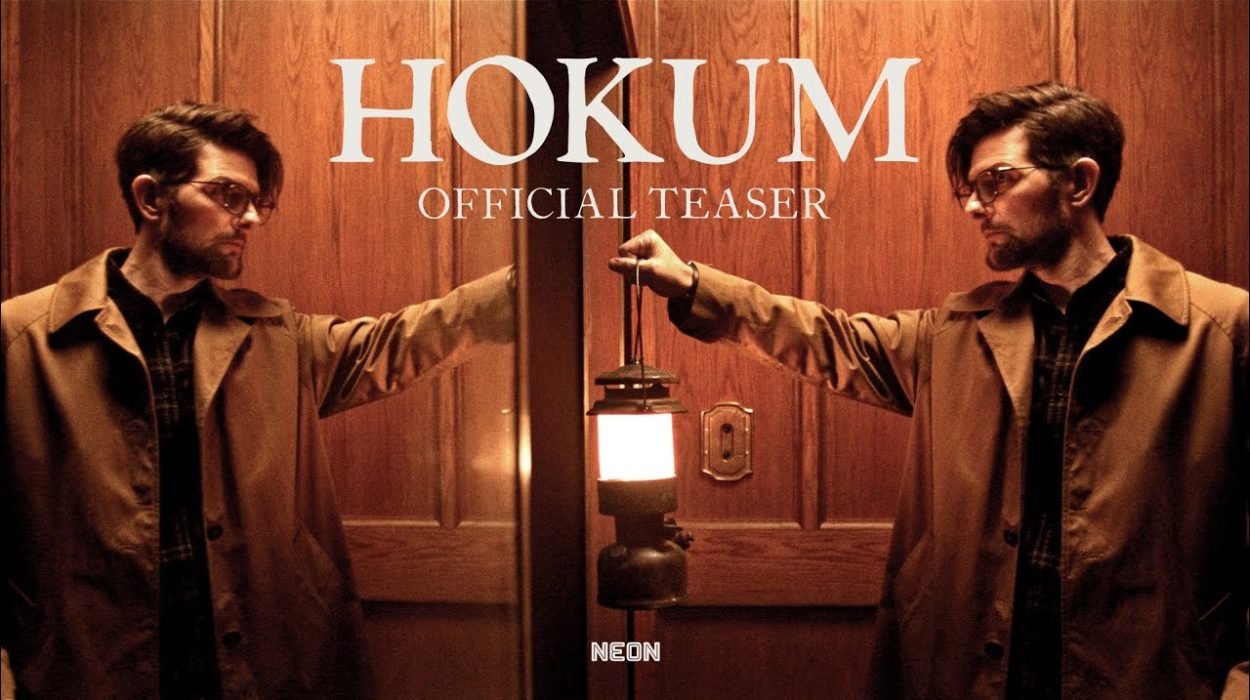
Hokum (2026): A Masterclass in Irish Gothic Dread and Psychological Horror
In the modern horror landscape, few filmmakers have cultivated a signature style as rapidly or as effectively as Damian McCarthy. Following the skin-crawling minimalism of Caveat (2020) and the breakout success of the supernatural thriller Oddity (2024), McCarthy returns to the screen with Hokum (2026). Starring a transformative Adam Scott, the film is a dense, atmospheric descent into folklore, grief, and the literal and metaphorical ghosts that inhabit the human psyche.
Released by Neon on May 1, 2026, Hokum is more than a mere “haunted hotel” story; it is a sophisticated exploration of how trauma and cynicism can blind a person to the terrors of reality until it is far too late.
Film Fast Facts: Hokum (2026)
| Feature | Details |
| Director | Damian McCarthy |
| Written By | Damian McCarthy |
| Main Cast | Adam Scott, Peter Coonan, Florence Ordesh, David Wilmot, Brendan Conroy |
| Genre | Supernatural Horror / Folk Horror |
| Release Date | May 1, 2026 |
| Runtime | 107 Minutes |
| Production Companies | Cweature Features, Spooky Pictures, Neon |
| Rating | R (Violence, Disturbing Images, Language) |
The Plot Synopsis: A Journey into the Bilberry Woods
The narrative centers on Ohm Bauman (Adam Scott), a successful yet profoundly nihilistic horror novelist famous for his “Conquistador Trilogy.” Ohm is a man of sharp edges and deep-seated trauma; he is dismissive of his fans and openly mocking of the supernatural “hokum” that populates his own books. Stricken with writer’s block and reeling from the death of his parents, Ohm travels to the Bilberry Woods Hotel in rural Ireland. His objective is simple: to scatter his parents’ ashes at the site of their honeymoon forty years prior.
Upon arrival, Ohm’s abrasive nature clashing with the hotel’s staff—the eccentric owner Cob (Brendan Conroy), the suspicious front desk clerk Mal (Peter Coonan), and the kind-hearted bartender Fiona (Florence Ordesh). The hotel itself is a character of its own, a labyrinthine structure filled with handmade figurines and local lore. The most pervasive legend concerns a locked honeymoon suite, which Cob insists houses a witch he trapped decades ago.
Ohm’s skepticism is shattered when, after a night of heavy drinking and a failed suicide attempt fueled by long-buried guilt over his mother’s death, he awakens weeks later to find the hotel empty for the season and Fiona missing. Driven by a desperate need for answers, Ohm teams up with Jerry (David Wilmot), a local recluse who uses “mushroom dust” to see beyond the physical world. Together, they infiltrate the locked suite, uncovering a terrifying reality where the ghosts of Ohm’s past intersect with a malevolent presence that has been waiting in the hotel’s foundation for years.
Detailed Critique and Technical Analysis
Direction and Atmosphere
Damian McCarthy continues to prove he is a master of “active framing.” Working with cinematographer Colm Hogan, McCarthy utilizes the hotel’s negative space to create a constant sense of unease. The camera often lingers on dark corners or slightly open doors, forcing the audience to scan the frame for movement. This creates a participatory form of horror where the viewer’s own imagination becomes an instrument of fear.
The Performance of Adam Scott
Breaking away from his “everyman” persona seen in Severance or his comedic roots, Adam Scott delivers a jagged, icy performance as Ohm Bauman. He portrays a protagonist who is intentionally unlikable—arrogant, rude, and dismissive. This choice makes his eventual descent into vulnerability and raw terror far more impactful. Scott’s ability to balance the character’s intellectual elitism with his underlying grief provides the film with its necessary emotional weight.
Screenplay and Themes
McCarthy’s script is a complex tapestry of folk horror and psychological thriller. The framing device—scenes from Ohm’s “Conquistador” book featuring a soldier and a boy in a desert—initially feels disconnected but eventually serves as a brilliant metaphor for Ohm’s own moral struggles. The film tackles themes of:
-
The Weight of Guilt: Ohm is literally and figuratively “chained” by the accidental death of his mother.
-
Cynicism vs. Belief: The title Hokum refers to Ohm’s dismissal of the supernatural, yet the film argues that a “closed mind” is just as dangerous as a superstitious one.
-
Folklore as Reality: McCarthy uses Irish legends not just for flavor, but as a framework for the film’s logic.
Visuals and Sound Design
True to McCarthy’s style, Hokum relies heavily on practical effects. The design of the “witch” and the various apparitions are tactile and grotesque, avoiding the “uncanny valley” issues of modern CGI. The sound design by Joseph Bishara is equally essential; the film uses oppressive silences punctuated by rhythmic, dissonant sounds—the ringing of a service bell, the creaking of wood—to build a tension that is almost physical.
Strengths and Weaknesses
Strengths
-
Unrivaled Atmosphere: The Bilberry Woods Hotel is one of the most effective horror settings in recent years.
-
Practical Horror: The creature design and “scare gags” are expertly crafted and genuinely frightening.
-
Subversive Protagonist: Adam Scott’s performance keeps the audience off-balance, never quite sure if they should root for him or fear him.
-
Thematic Depth: It elevates standard “jump-scare” horror into a poignant meditation on grief and atonement.
Weaknesses
-
Deliberate Pacing: The mid-section of the film, focusing on the investigation and Jerry’s mushroom-induced philosophy, may feel slow for audiences expecting a fast-paced slasher.
-
Conceptual Density: The metaphor of the “Conquistador” book and the ending’s shift into a “basement underworld” may be polarizing for those who prefer more grounded horror.
Final Verdict
Hokum (2026) is a triumphant confirmation of Damian McCarthy’s status as a top-tier horror director. It is a film that rewards patient viewers with a rich, terrifying, and ultimately moving cinematic experience. While its protagonist is prickly and its plot is dense with folklore, the sheer craftsmanship on display—from the sound design to the practical effects—makes it a must-watch for genre fans. It is a haunting reminder that the things we dismiss as “hokum” are often the things that have the power to destroy us.
Final Score: 9/10