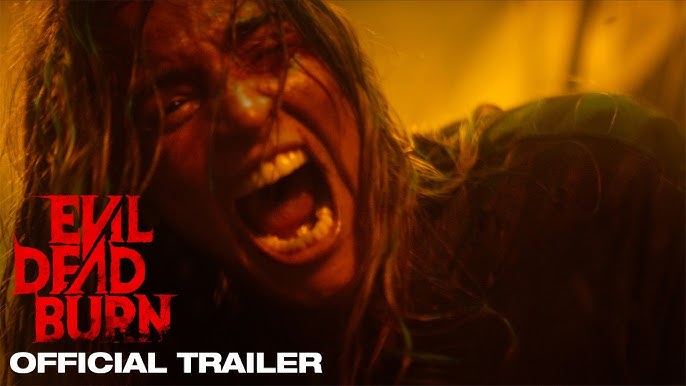
Evil Dead Burn (2026) Review: Sébastien Vaniček Unleashes the Franchise’s Most Relentless, Blood-Drenched Nightmare
The Evil Dead franchise has long been celebrated as a gold standard in graphic horror, shifting masterfully over the decades from Sam Raimi’s manic slapstick roots to Fede Álvarez’s 2013 hyper-visceral reboot and Lee Cronin’s urban apartment-complex terror in Evil Dead Rise (2023). With Evil Dead Burn (2026), French filmmaker Sébastien Vaniček takes the reins, stripping away almost all remaining vestiges of dark comedy to deliver an uncompromising, nerve-shredding exercise in pure survival horror. Clocking in at a brisk 109 minutes, this sixth installment transplants the franchise’s signature demonic malice to a secluded estate during a winter family gathering, offering a claustrophobic and deeply unsettling experience that pushes the boundaries of theatrical body horror.
Evil Dead Burn (2026): Key Film Facts
For horror enthusiasts and box office tracking, here is the essential logistical breakdown of the New Line Cinema and Screen Gems co-production:
| Metric / Detail | Film Specifications |
| Director | Sébastien Vaniček |
| Writers | Sébastien Vaniček, Florent Bernard |
| Main Cast | Souheila Yacoub, Hunter Doohan, Tandi Wright, Luciane Buchanan, Erroll Shand |
| Genre | Supernatural Horror / Splatter Film |
| Runtime | 109 minutes |
| U.S. Release Date | July 10, 2026 |
| Distributor | Warner Bros. Pictures (Domestic), Sony Pictures Releasing (International) |
| Production Companies | Ghost House Pictures, New Line Cinema, Screen Gems |
| Budget / Box Office | $20 Million Budget / $6.7 Million Opening Yield |
Full Plot Synopsis: A Family Reunion From Hell
The narrative foundation of Evil Dead Burn grounds its supernatural elements in heavy, domestic grief. The story follows Alice Price (Souheila Yacoub), a young woman reeling from the sudden, violent death of her husband, William. Seeking a semblance of closure and solace, Alice travels to a isolated country house to join her estranged in-laws for William’s formal cremation and memorial service.
The atmosphere within the home is instantly toxic. William’s parents, Susan (Tandi Wright) and Edgar (Erroll Shand), openly harbor deep resentment toward Alice, quietly blaming her for the fatal car accident that took their son’s life. Tensions flare further among the broader family unit, which includes William’s brother Joseph (Hunter Doohan), Joseph’s girlfriend Thya (Luciane Buchanan), and the family matriarch, grandmother Polly (Maude Davey).
The fragile veneer of family mourning shatters completely following a private visit to the basement by Edgar, who has spent years collecting obscure, occultic antiquities. Among his collection rests a familiar artifact bound in human flesh: the Necronomicon Ex-Mortis. Upon the accidental playback of an old archival recording warning of ancient evil, the Book of the Dead awakens.
An ancient, predatory entity sweeps through the secluded estate, immediately claiming Edgar as its initial vessel. Transformed into a cackling, sadistically cruel Deadite, Edgar turns on the family. What follows is a rapid, domino-effect infection where family members are systematically possessed, mutilated, and turned against one another. Alice is forced into a desperate, blood-slicked battle for survival, realizing that the domestic ties that once bound this family have mutated into a literal death trap.
Detailed Critique
Themes: The Weaponization of Domestic Grief
Vaniček and co-writer Florent Bernard wisely construct the horror around the internal cracks of the Price family. The Necronomicon in this iteration acts as a grotesque catalyst that weaponizes unspoken resentments. The Deadites do not merely slash and bite; they use the intimate secrets, guilt, and failures of the living characters to psychologically torture them before inflicting physical harm. Alice’s struggle is symbolic of fighting through an abusive family structure that refuses to let her heal, literalized through an onslaught of flying blood and bone.
Direction and Pacing: Relentless Kinetic Energy
Sébastien Vaniček brings the same chaotic, propulsive energy he displayed in his previous creature-feature work. Once the first incantation is spoken, Evil Dead Burn rarely pauses for breath. Vaniček excels at managing spatial geography within a single, shrinking location, utilizing tight camera tracking shots that make the audience feel trapped in the corridors alongside the characters. His approach to horror leans heavily on atmospheric dread mixed with sudden, shock-inducing violence that keeps viewers off-balance.
Performances: Souheila Yacoub’s Star-Making Turn
As Alice, Souheila Yacoub carries the emotional and physical weight of the entire picture. She portrays Alice not as a flawless action heroine, but as an exhausted, terrified widow who finds a reserve of primal survival instinct. Her performance is incredibly physical, requiring her to endure an extraordinary amount of practical gore effects while maintaining a grounded sense of emotional devastation. Hunter Doohan also shines as Joseph, capturing the tragic unraveling of a brother caught between the memory of his past family and the monstrous reality in front of him.
Visuals and Sound: An Orgy of Practical Effects
Cinematographer Philip Lozano eschews the clean digital look of modern blockbusters in favor of a gritty, heavily contrasted palette that emphasizes deep shadow and wet, crimson textures. The film relies heavily on practical makeup and physical stunts, ensuring that every severing of flesh feels tangible and sickening.
The sound design is equally brutal. The cracking of joints, the wet crunch of fracturing bone, and the unnerving, distorted vocal layering of the Deadites are mixed to maximize discomfort. The electronic and orchestral score by Double Danger complements the visuals perfectly, opting for abrasive, discordant tones rather than conventional, swelling jump-scare cues.
Strengths and Weaknesses
Strengths
-
Uncompromising Gore: For hardcore genre fans, the practical effects work is top-tier, featuring inventive and highly graphic set pieces (including an unforgettable sequence involving a running dishwasher and another utilizing heavy-duty fishing line).
-
Atmospheric Pacing: The film builds a suffocating sense of isolation, utilizing its remote winter backdrop to amplify the helplessness of the characters.
-
Strong Lead Performance: Yacoub delivers a fiercely memorable performance that easily cements her character in the pantheon of great Evil Dead survivors.
Weaknesses
-
Absence of Levity: Viewers looking for the campy, tongue-in-cheek humor popularized by Bruce Campbell’s Ash Williams may find the film’s unyielding cruelty and pitch-black tone exhausting.
-
Underdeveloped Supporting Cast: Because the demonic infection spreads so quickly, several family members are converted into Deadites before receiving meaningful character development, reducing them to mere fodder for the slaughter.
Final Verdict
Evil Dead Burn is an unsparing, visually arresting addition to the legendary horror mythos. Sébastien Vaniček successfully honors the legacy of Ghost House Pictures while steering the franchise into its most mean-spirited, terrifying territory yet. While it intentionally discards the eccentric comedy of the original sequels in favor of direct, grueling terror, its masterful execution, exceptional practical effects, and raw central performance make it a mandatory viewing experience for dedicated horror purists.