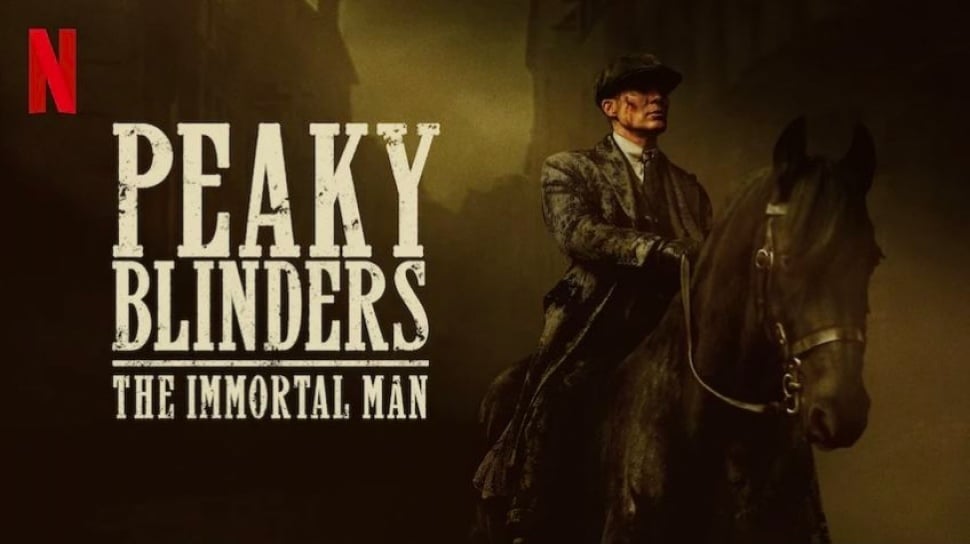
Peaky Blinders: The Immortal Man Review – Tommy Shelby’s Scorched-Earth Finale
The long-awaited cinematic conclusion to Steven Knight’s Birmingham odyssey has finally arrived. Peaky Blinders: The Immortal Man (2026) is not merely a feature-length episode; it is a brutal, high-stakes evolution of the Shelby legacy. Directed by Tom Harper—who returns to the franchise after helming the show’s debut season—the film successfully bridges the gap between the gritty street-level brawls of Small Heath and the global devastation of World War II.
With an Academy Award now to his name, Cillian Murphy delivers a performance of haunting precision, proving that while Thomas Shelby may have tried to outrun his past, the ghosts of the Garrison Tavern have a long reach.
Peaky Blinders: The Immortal Man – Movie Overview
| Feature | Details |
| Director | Tom Harper |
| Writer | Steven Knight |
| Release Date | March 6, 2026 (Theaters) / March 20, 2026 (Netflix) |
| Runtime | 112 Minutes |
| Genre | Crime, Period Drama |
| Cast | Cillian Murphy, Barry Keoghan, Rebecca Ferguson, Tim Roth, Sophie Rundle, Stephen Graham |
Full Plot Synopsis: The Shelby Family at War
The year is 1940. Birmingham is no longer just a playground for the Peaky Blinders; it is a primary target of the Nazi Blitz. The film opens with Thomas Shelby (Cillian Murphy) living in a self-imposed, monastic exile following the events of the series finale. Haunted by the loss of his daughter Ruby and the weight of his own “immortality,” Tommy has sought peace in a rural retreat, attempting to exorcise his demons by writing his memoirs.
However, the “Immortal Man” is pulled back into the fray when British Intelligence and the looming threat of fascism collide with his family’s survival. A new antagonist, John Beckett (Tim Roth), a British Nazi agent, represents a dark mirror to Tommy’s own political ambitions. Beckett plans to flood the UK economy with millions in counterfeit currency produced in concentration camps to collapse the British war effort.
The narrative introduces a generational shift, focusing heavily on Erasmus “Duke” Shelby (Barry Keoghan), Tommy’s illegitimate son. Duke has taken the reins of the family business in Birmingham, but his unscrupulous methods and a dangerous alliance with Beckett threaten to destroy the Shelby name. As the German Luftwaffe bombs the BSA factory in Small Heath, Tommy must don his signature flat cap one last time to save his family and his country from an internal rot.
A Masterclass in Performance: Murphy and the New Guard
Cillian Murphy as Thomas Shelby
Murphy’s portrayal of Tommy Shelby has always been defined by what he doesn’t say. In The Immortal Man, his performance is more internal than ever. Having played the character for over a decade, Murphy brings a weary, almost spectral quality to the role. There is a profound sense of “too much life” in his eyes, fitting for a character who has survived multiple wars, assassinations, and his own self-destructive tendencies.
The Newcomers: Keoghan, Ferguson, and Roth
-
Barry Keoghan: Taking over the leadership of the underworld with a feral intensity, Keoghan is the film’s standout. He provides the kinetic energy that a wartime setting demands, acting as a volatile foil to his father’s cold calculation.
-
Rebecca Ferguson: Playing the mysterious twins Kaulo and Zelda, Ferguson adds a layer of sophisticated mystery and personal stakes, linking Tommy’s past with the immediate threat to his household.
-
Tim Roth: As the primary antagonist John Beckett, Roth avoids the scenery-chewing tropes of past villains. Instead, he presents a quiet, bureaucratic evil that feels chillingly grounded in the historical reality of 1940s fascism.
Direction and Visuals: A Cinematic Gear Shift
Director Tom Harper and cinematographer George Steel elevate the visual language of the series to meet the demands of the big screen. The “Peaky” aesthetic—slow-motion walks, fire-lit silhouettes, and heavy smoke—is present, but it is expanded by the scale of World War II.
The recreation of a bombed-out Birmingham is harrowing. The contrast between the industrial grime of the Shelby factories and the terrifying beauty of the night sky during an air raid is expertly handled. This isn’t just a gangster movie; it’s a war film seen through a narrow, jagged lens.
The Sound of Small Heath
The soundtrack remains a vital character. Eschewing a traditional orchestral score for the show’s signature contemporary rock influences, the film features tracks from Fontaines D.C. and Amyl & the Sniffers, alongside a newly recorded version of Nick Cave’s iconic “Red Right Hand.” The sound design during the action sequences is visceral, making every gunshot and explosion feel personal.
Strengths and Weaknesses
Strengths
-
Historical Integration: The transition into WWII feels organic, using the Blitz to heighten the personal stakes for the Shelby clan.
-
Generational Depth: The relationship between Tommy and Duke provides the emotional core that justifies this cinematic extension.
-
Technical Excellence: At 112 minutes, the film is lean and avoids the “filler” often found in series-to-film adaptations.
Weaknesses
-
Supporting Cast Density: With so many returning characters like Ada Thorne (Sophie Rundle) and Johnny Dogs (Packy Lee), some fan favorites receive limited screen time.
-
Bleakness: The film is relentlessly dark. While consistent with the series, the lack of levity may be taxing for casual viewers.
Final Verdict: A Worthy Swan Song
Peaky Blinders: The Immortal Man is a rare example of a television-to-film transition that feels essential. It provides a definitive punctuation mark to Thomas Shelby’s journey while cleverly planting the seeds for the “next generation” of Shelbys. Steven Knight has delivered a script that honors the fans without relying solely on nostalgia.
It is a bloody, poetic, and ultimately satisfying conclusion to one of the most iconic crime sagas of the 21st century.