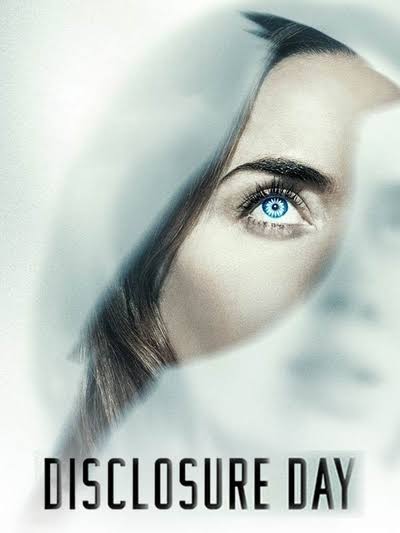
‘Disclosure Day’ Review: Steven Spielberg Reinvents the UFO Mythos with Paranoid Mastery
Two decades after capturing the visceral terror of an alien invasion in War of the Worlds (2005), master filmmaker Steven Spielberg returns to his defining cinematic arena with Disclosure Day (2026). Teaming once more with veteran screenwriter David Koepp, Spielberg delivers an intellectually rigorous, beautifully eccentric science-fiction thriller. The film moves away from the apocalyptic grandeur of generic blockbuster spectacles to deliver a grounded, multi-layered examination of institutional control, modern misinformation, and the profound weight of universal truth.
Disclosure Day shifts the focus away from explosive interstellar combat, centering instead on a paranoid digital era where information is tightly managed by bureaucratic systems. The film poses a complex thematic question: What happens to human civilization when a paradigm-shifting truth is leaked to an unprepared global public?
Technical Overview: Production Details and Official Cast
| Attribute | Production Detail |
| Director | Steven Spielberg |
| Screenplay | David Koepp |
| Story By | Steven Spielberg |
| Producers | Kristie Macosko Krieger, Steven Spielberg |
| Starring | Emily Blunt, Josh O’Connor, Colin Firth, Eve Hewson, Colman Domingo |
| Cinematography | Janusz Kamiński |
| Musical Score | John Williams |
| Editor | Sarah Broshar |
| Production Company | Amblin Entertainment |
| Distributor | Universal Pictures |
| Running Time | 145 Minutes |
| Budget | $115 Million |
Plot Synopsis: The Race to Unmask the Cosmos
The narrative of Disclosure Day unfolds along two distinct storylines that slowly weave together, charting the hazardous journey of two individuals who uncover the world’s most guarded secret.
The Cryptic Awakening
Margaret Fairchild (Emily Blunt) is a dedicated television meteorologist working in Kansas City. Her structured life is disrupted during an ordinary breakfast with her supportive live-in boyfriend, Jackson (Wyatt Russell), when she suddenly begins speaking fluent, rapid Russian—a language she has never studied. This bizarre cognitive anomaly coincides with a series of unexplained atmospheric and thermal events across the American Midwest. As Margaret searches for scientific answers, she realizes her sudden linguistic capability is tied to a deeper, anomalous atmospheric frequency.
[Atmospheric Frequency Event] ===> Triggers Psychological Anomaly (Margaret) \
                                                                               ===> The Alliance & The Public Leak
[WARDEX Data Extraction]     ===> Triggers Institutional Pursuit (Daniel)   /
Simultaneously, Daniel Kellner (Josh O’Connor) works as a brilliant cybersecurity analyst for WARDEX, an ultra-classified government intelligence entity operating outside typical public oversight. For decades, WARDEX has systematically hidden confirmed data regarding the existence of extraterrestrial life to preserve institutional and socioeconomic stability. Disillusioned by the scale of the deception, Daniel copies an array of top-secret telemetry and deep-space communication records onto an encrypted drive, intending to leak the findings to the world.
The Targeted Flight
Daniel’s insubordination immediately turns him into a high-value target for Noah Scanlon (Colin Firth), the calculating, cold-blooded director of WARDEX. Scanlon views absolute secrecy not as a malicious cover-up, but as a stabilizing social necessity. He dispatches specialized security units to track Daniel down before the data can be uncompressed and distributed.
On the run, Daniel is joined by his girlfriend Jane (Eve Hewson), a former nun whose background in spiritual mysticism provides a calm contrast to the high-tech panic of their situation. Seeking protection, they align with Hugo Wakefield (Colman Domingo), an enigmatic WARDEX defector who has spent years establishing an underground network advocating for public disclosure.
When Daniel’s encrypted trail intersects with Margaret’s localized atmospheric anomalies, the group realizes that her psychological shift is part of a broader terrestrial signal transmission. Pursued by Scanlon’s extraction teams across the American landscape—culminating in a harrowing sequence where a car is violently dragged by a speeding locomotive—the alliance races against time to broadcast the uncompressed data to every satellite, television, and mobile network on Earth, establishing an irreversible “Disclosure Day.”
Detailed Cinematic Critique
Directorial Vision and Screenplay
At 79 years old, Steven Spielberg demonstrates an exceptional command of cinematic tension, blending the childlike wonder of Close Encounters of the Third Kind with the institutional paranoia of a 1970s political thriller. Rather than relying on standard disaster tropes, Spielberg chooses restraint. He frames the alien phenomenon as a heavy bureaucratic secret rather than an immediate physical threat.
David Koepp’s screenplay balances dense technological concepts, religious themes, and political dread effectively. The narrative progresses smoothly over its 145-minute runtime, using quiet, dialogue-driven suspense in small rooms to build tension before breaking out into carefully executed action set-pieces.
+--------------------------------------------------------------------------+
|                  Spielberg's Sci-Fi Evolution Matrix                     |
+------------------------------------+-------------------------------------+
| E.T. / Close Encounters            | War of the Worlds                   |
| - Interstellar kinship             | - Visceral, chaotic survival terror |
| - Childlike wonder & optimism      | - Destructive physical invasion     |
+------------------------------------+-------------------------------------+
|         --- [ DISCLOSURE DAY (2026) ] ---                                |
|         - Institutional control, data manipulation, systemic truth       |
+--------------------------------------------------------------------------+
Acting Performances
-
Emily Blunt (Margaret Fairchild): Blunt delivers an exceptional performance, anchoring the film’s stranger narrative elements with intense, physical realism. Her transition from a local professional to an involuntary channel for an otherworldly signal is handled with impressive precision.
-
Josh O’Connor (Daniel Kellner): O’Connor brings an authentic, nervous energy to the whistleblower character. He portrays Daniel not as a flawless cinematic hero, but as an anxious analyst carrying a heavy historical burden.
-
Colin Firth (Noah Scanlon): Firth is excellent as the primary antagonist. He avoids standard villain caricatures, portraying Scanlon as an elite bureaucrat driven by an absolute conviction that human society would collapse under the weight of full disclosure.
-
Eve Hewson & Colman Domingo: Hewson adds an intriguing layer of calm mysticism to the runaways’ journey, while Domingo infuses the screen with warmth, authority, and gravity as the veteran defector.
Visuals, Cinematography, and Sound
Longtime cinematographer Janusz Kamiński adopts a controlled visual palette for Disclosure Day. Moving away from his traditional hyper-saturated light blooms, Kamiński relies on colder, institutional tones—steel blues, slate grays, and deep shadows—to heighten the film’s themes of surveillance and state control. The framing emphasizes the vastness of the industrial complexes hunting the protagonists, keeping the focus tight and immediate during moments of sudden movement.
The film’s sound design is remarkably precise, utilizing the low hum of data servers and sudden changes in ambient noise to mirror Margaret’s psychological state. Legendary composer John Williams contributes an understated, minimalist score. Eschewing his iconic, sweeping brass arrangements, Williams utilizes subtle electronic textures and low string melodies that underline the film’s omnipresent sense of surveillance.
Strengths and Weaknesses
Strengths
-
Sophisticated Concept: The narrative approaches the topic of extraterrestrial contact through a fresh lens, examining public data access and institutional trust rather than standard invasion tropes.
-
Grounded Direction: Spielberg prioritizes practical, character-driven tension over extensive digital visual effects, resulting in clear visual storytelling.
-
Strong Ensemble: The central performances give depth to the script’s ethical and philosophical questions.
-
Minimalist Score: John Williams’ understated composition complements the tense, paranoid tone of the cinematography perfectly.
Weaknesses
-
Deliberate Pacing: The film’s second act slows down to establish the technical and philosophical parameters of the leak, which may require patience from audiences expecting a fast-paced action feature.
-
Narrative Ambiguity: Viewers hoping for a conventional, explicit look at physical alien entities may find the film’s focus on data transmission and human social response somewhat unconventional.
Final Verdict
Disclosure Day stands as one of Steven Spielberg’s most mature and conceptually reflective science-fiction works. By framing extraterrestrial contact as a battle over classified data and public awareness, the film speaks directly to contemporary anxieties regarding digital control and institutional transparency. Supported by brilliant performances from Emily Blunt and Josh O’Connor, it is a masterfully directed, intellectual thriller that offers a compelling, philosophical addition to modern cinema.