
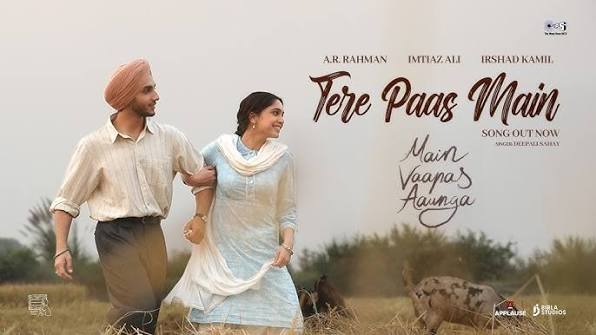
The Geography of Heartbreak: Imtiaz Ali’s Main Vaapas Aaunga (2026) Elegantly Redefines the Partition Epic
Imtiaz Ali’s cinematic universe has long been populated by spiritual wanderers, characters who run away from home only to find their souls anchored to a singular, transformative romantic connection. In his previous works, these emotional journeys took place across highways, European cities, or contemporary subcultures. However, with Main Vaapas Aaunga (2026), Ali anchors his trademark themes of longing, memory, and spiritual identity within the most painful historical fracture of the Indian subcontinent: the 1947 Partition.
Co-written with Nayanika Mahtani, the film moves away from conventional historical melodrama. Instead of focusing heavily on political violence, it presents a gentle, deeply moving study of how trauma echoes across generations. Released in theaters on June 12, 2026, Main Vaapas Aaunga uses a dual-timeline structure to examine the weight of an unfulfilled promise. Supported by an exceptional ensemble cast—including Diljit Dosanjh, Naseeruddin Shah, Sharvari, and Vedang Raina—and featuring a brilliant musical score by A.R. Rahman, the film stands out as one of the most intellectually ambitious and emotionally resonant Indian dramas of 2026.
Main Vaapas Aaunga (2026): Key Production Details
For film scholars, critics, and industry analysts, the technical, creative, and financial architecture of Main Vaapas Aaunga is detailed in the table below:
| Technical & Creative Elements | Film Specifications and Credits |
| Director | Imtiaz Ali |
| Screenplay Writers | Imtiaz Ali, Nayanika Mahtani |
| Story Concept | Rooted in real-life oral accounts of Partition-era survivors |
| Lead Cast | Diljit Dosanjh, Naseeruddin Shah, Sharvari, Vedang Raina |
| Supporting Cast | Banita Sandhu, Rajat Kapoor, Sanjay Suri, Anjana Sukhani |
| Music Composer | A.R. Rahman |
| Lyricist | Irshad Kamil |
| Director of Photography | Sylvester Fonseca, ISC |
| Film Editor | Aarti Bajaj |
| Production Design | Suman Roy Mahapatra |
| Costume Design | Sheetal Iqbal Sharma |
| Production Houses | Applause Entertainment, Birla Studios, Window Seat Films |
| Theatrical Release Date | June 12, 2026 |
| Running Time | 167 minutes (2 hours, 47 minutes) |
| Language & Origin | Hindi (India) |
| Production Budget | ₹70 crore |
Narrative Architecture: A Comprehensive Plot Synopsis
The story of Main Vaapas Aaunga is structured around two parallel timelines that eventually merge into a singular emotional arc. It explores the idea that while geopolitical borders can divide land, they cannot easily dissolve the emotional attachments formed before the divide.
[The Contemporary Reality]
Elderly Ishar Singh "Keenu" (Naseeruddin Shah) lives in Punjab, India, battling advanced dementia.
       │
       ▼ (Flashback Loop / Internal Monologue)
[1947 Sargodha, Pre-Partition India]
Young Ishar (Vedang Raina) falls in love with Afsana / Jiya (Sharvari) amidst rising tension.
       │
       ▼ (The Historical Rupture)
The border is drawn. Ishar is forced east, leaving Jiya behind with the vow: "Main Vaapas Aaunga."
       │
       ▼ (The Modern Pilgrimage)
His grandson (Diljit Dosanjh) journeys back across memory and borders to find Jiya and grant Keenu peace.
The contemporary timeline focuses on the quiet life of elderly Ishar Singh, affectionately known as Keenu (played with immense vulnerability by Naseeruddin Shah). Living in modern-day Indian Punjab, Keenu is dealing with advanced dementia. As his immediate surroundings fade from his mind, his memory becomes firmly anchored to a single, vibrant period of his past: the summer of 1947 in Sargodha, a town now located in Pakistan. His family watches as his daily life is interrupted by vivid flashbacks, showing that his mind is still living out a past that occurred nearly eighty years ago.
In the 1947 timeline, a young, optimistic Ishar (Vedang Raina) falls into a deep, soul-stirring romance with Afsana, who is also called Jiya (Sharvari). Their relationship develops against the backdrop of British India’s final days, where communal harmony is slowly replaced by growing political unrest. The film captures their quiet moments together along the rivers and fields of unified Punjab, building a sense of peace that makes the upcoming displacement feel even more striking. When Partition divides the province, chaos breaks out. Uprooted by the sudden violence and forced migration, Ishar is pushed eastward toward the new border. In their final, frantic moments together, he leaves Jiya with a desperate promise that gives the film its title: “Main Vaapas Aaunga” (I will return).
In the present day, Keenu’s grandson (Diljit Dosanjh) realizes his grandfather’s erratic behavior and persistent attempts to walk out the front door are not random signs of illness. Instead, they are the actions of a man trying to honor an unbroken promise. Armed with only a few old letters, a worn photograph, and fragments of stories, Dosanjh’s character sets out on a journey across borders and through historical records. He hopes to uncover Jiya’s fate, bridge the gap between past and present, and finally bring closure to an old man’s lifelong wait.
Cinematic Analysis and Critical Assessment
Direction and Structural Framework
Imtiaz Ali’s direction in Main Vaapas Aaunga represents a highly mature evolution of his standard thematic focus. While his earlier films (Rockstar, Tamasha) looked at the internal struggles of contemporary characters, this project expands those personal stakes to fit a massive historical backdrop. Ali handles the dual-timeline format with real finesse. Working alongside his longtime editor Aarti Bajaj, he avoids jarring cuts. Instead, he uses smart visual transitions—like matching the movement of water or the changing light in a room—to bridge the gap between 1947 and 2026. His approach to Partition avoids heavy political messaging, treating the event as a shared human tragedy rather than a simple conflict between nations.
Performance Evaluation
The performances provide the emotional core of the film. Naseeruddin Shah gives a masterful performance as the elderly Keenu. He captures the confusion, sudden moments of clarity, and deep-seated sorrow of a man lost in his own memories without resorting to typical cinematic clichés of aging.
Vedang Raina is equally impressive as the young Ishar. He brings an earnest, old-world charm to the role, and his gradual realization of the impending political tragedy is portrayed with a quiet, effective intensity.
+-------------------------------------------------------------------------+
|                      PERFORMANCE BREAKDOWN                              |
+-------------------------------------------------------------------------+
| Naseeruddin Shah : Portrays the heavy burden of lifelong trauma and     |
|                    memory loss with exceptional restraint.              |
+-------------------------------------------------------------------------+
| Vedang Raina     : Captures the transition from youthful idealism to    |
|                    the harsh realities of wartime displacement.          |
+-------------------------------------------------------------------------+
| Sharvari         : Avoids passive tropes, playing Jiya with a powerful  |
|                    mix of warmth and internal resilience.               |
+-------------------------------------------------------------------------+
| Diljit Dosanjh   : Acts as the empathetic heart of the modern story,    |
|                    bringing natural warmth to a somber narrative.       |
+-------------------------------------------------------------------------+
Sharvari delivers a standout performance as Afsana/Jiya. She brings a strong presence to her scenes, making it easy to understand why her memory would stay with Ishar for the rest of his life. Meanwhile, Diljit Dosanjh serves as the emotional bridge of the contemporary timeline. His performance is grounded, compassionate, and naturally warm, preventing the modern-day framing sequence from feeling like an afterthought.
Visual Aesthetic and Auditory Landscape
The film’s visual design is a major asset. Cinematographer Sylvester Fonseca distinguishes between the two timelines through a carefully chosen color palette. Pre-Partition Sargodha is shot in warm, golden tones that suggest a sense of memory and nostalgia. In contrast, the modern timeline uses cooler, more natural lighting to reflect the stark reality of the present. Suman Roy Mahapatra’s detailed production design and Sheetal Iqbal Sharma’s period-accurate costumes recreate the era authentically without making it look like a stage set.
A.R. Rahman’s score works beautifully alongside the imagery, with lyrics by Irshad Kamil that directly reflect the characters’ inner thoughts. Tracks like “Kya Kamaal Hai” offer moments of pure romantic optimism, while “Maskara” and the melancholic variations of “Tere Paas Main” provide a haunting reflection of the separation on screen. The sound design by Dhiman Karmakar also deserves mention for how it blends modern ambient noises with distant, historical echoes, emphasizing Keenu’s fractured state of mind.
Strengths and Weaknesses
Strengths
-
Thoughtful Historical Approach: The screenplay avoids political bias, focusing entirely on the human impact of displacement and migration.
-
Balanced Dual Narrative: The editing ensures that both timelines carry equal emotional weight, preventing either from disrupting the story’s flow.
-
Excellent Ensemble Acting: The performances across both generations are strong, with Naseeruddin Shah and Vedang Raina creating a believable, unified character.
-
Memorable Soundtrack: A.R. Rahman’s music and Irshad Kamil’s lyrics are deeply integrated into the story, enhancing the film’s emotional impact.
Weaknesses
-
Deliberate Pacing: With a runtime of 167 minutes, the slower pace of the second half may feel a bit indulgent for viewers accustomed to faster-moving dramas.
-
Stylized Dialogue: Certain scenes rely on highly poetic dialogue that can occasionally feel a little detached from the raw, chaotic reality of the historical events.
Final Verdict
Main Vaapas Aaunga is a standout addition to Imtiaz Ali’s filmography, showing a director working with a high level of creative maturity. By grounding his familiar themes of romantic longing within a significant historical event, Ali has created a film that functions as both an intimate character study and a broader meditation on shared cultural memory. Supported by excellent performances, thoughtful cinematography, and an exceptional musical score, it stands out as a highly accomplished and memorable entry in 2026 cinema.