
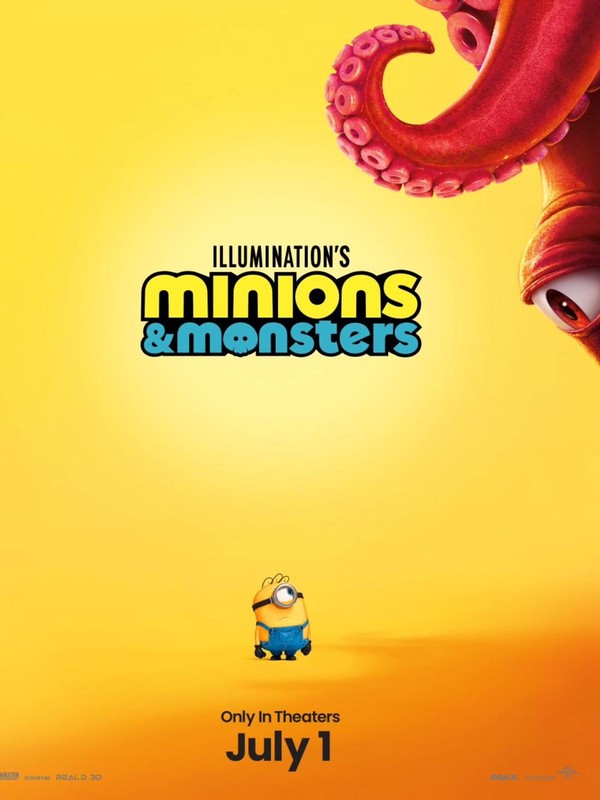
Minions & Monsters Review: Illumination’s Prequel Hits a Creative High in Old Hollywood
Illumination Entertainment has mastered the art of studio animation economy. Since their banana-obsessed henchmen first hijacked the cultural zeitgeist in 2010, the Despicable Me cinematic universe has reliably prioritized sensory overload, physical slapstick, and commercial dominance over complex emotional narratives. Yet, Minions & Monsters (2026), the third installment in the Minions prequel series and the seventh franchise chapter overall, charts a fascinating, hyperactive new course. Directed by franchise veteran Pierre Coffin and co-written with Brian Lynch, the production transplants its sub-lingual yellow anomalies to the dawn of studio filmmaking. The result is a brisk, joyfully anarchic text that operates simultaneously as a love letter to classic creature features and an unhinged exercise in animated chaos.
Minions & Monsters (2026) Official Overview
| Attribute | Details |
| Director | Pierre Coffin |
| Screenplay | Brian Lynch, Pierre Coffin |
| Producers | Chris Meledandri, Bill Ryan |
| Voice Cast | Pierre Coffin, Trey Parker, Allison Janney, Christoph Waltz, Jesse Eisenberg, Jeff Bridges, Zoey Deutch, Bobby Moynihan, Phil LaMarr |
| Production House | Illumination Entertainment / Universal Pictures |
| Running Time | 90 minutes |
| MPAA Rating | PG (Mild threat, action, and rude humor) |
| Theatrical Release | July 1, 2026 (United States) |
Full Plot Synopsis: A Golden Age Disaster
The narrative structure of Minions & Monsters takes place in 1920, placing it exactly 48 years before the events of the original Minions (2015) and well before their fateful alliance with a young Gru. Wandering the Earth in search of a formidable master, a distinct, independent tribe of the yellow collective stumbles across the booming, lawless landscape of early Old Hollywood. Entranced by the scale of the silent silver screen, the Minions determine that the ultimate path to global subjugation and adoration lies not in standard villainy, but in the entertainment business. They set their sights on making the definitive, terrifying monster movie.
Our primary entry points are three new standout Minions: James, an artistic spirit with a passion for sketching; Henry, a high-strung organizer; and Ed, an opportunistic companion who has swiped a powerful spellbook from their previous master, an ill-fated wicked warlock. Their brief and accidental appearance on a Hollywood backlot quickly pays off, catapulting the trio and their tribe into short-lived luxury as bona-fide silent film stars. However, their 15 minutes of fame are abruptly cut short by the historic arrival of synchronized sound. Unable to adapt to the era of “talkies” due to their entirely incomprehensible “Minionese” language, the tribe falls out of public favor, leaving them destitute on the streets of Los Angeles.
Refusing to abandon their cinematic dreams, James, Henry, and Ed break away from the tribe to produce an independent horror masterpiece. Desperate for authentic creature features, Ed opens the stolen spellbook. Henry inadvertently summons a series of genuine, fearsome monsters into the modern world, including the chaotic sea beasts Phillips (voiced by Bobby Moynihan) and Howard (voiced by Phil LaMarr). Enter Goomi (voiced by Trey Parker), a mysterious handler who leads the small Minion contingent to a frozen fortress under the pretense of directing these creatures as Hollywood stars.
In reality, Goomi harbors a villainous agenda: he intends to use Phillips and Howard to awaken Irene, a massive, catastrophic orange blob monster capable of global destruction. When Henry uncovers the scheme, he is captured by the sea creatures to serve as a live sacrifice during the climactic “scene” where Irene is unleashed. As Irene breaks containment and tramples through the backlots of classic Los Angeles, the planet faces total destruction. Stripped of their studio standing and facing an apocalypse of their own making, the remaining Minion faction must band together, utilizing an array of absurd, improvised movie-magic props, optical illusions, and stunt equipment to recapture the rampaging monsters and save the world.
Detailed Critique: Direction, Voice Acting, and Aesthetics
Direction and Screenplay: High-Velocity Homage
Pierre Coffin understands the kinetic architecture of these characters better than anyone. By sharing screenwriting duties with Brian Lynch, Coffin grounds the episodic nature of Minion gags within a unified thematic framework: the art of illusion. The pacing is breathless, pushing the 90-minute runtime forward with a cadence heavily indebted to Buster Keaton and Charlie Chaplin. The screenplay treats Old Hollywood as a playground of physical vulnerabilities, maximizing the comedic potential of exploding nitrate film reels, unstable camera rigs, and collapsing painted backdrops.
While it lacks the existential melancholy that rival studios routinely utilize, the script avoids becoming empty sensory white noise. The meta-narrative surrounding the industry’s transition from silent features to synchronized talkies provides a clever satiric layer. It directly penalizes the characters for their lack of clear English dialogue, transforming their signature character trait into a genuine plot mechanism.
Voice Cast: Eclectic and Inspired
Pierre Coffin continues his flawless, Herculean vocal performance as the entire Minion collective, executing micro-variations in dialect that convey surprisingly clear emotional states across James, Henry, and Ed. The supporting ensemble injects a distinct texture into the madness:
-
Jesse Eisenberg delivers a signature performance of high-strung, fast-talking anxiety that perfectly anchors the human side of the film’s studio ecosystem.
-
Trey Parker steps away from his traditional adult animation roots to provide a delightfully expressive, shifting vocal performance as Goomi, sliding effortlessly from an endearing guide to a theatrical, high-stakes antagonist.
-
Christoph Waltz lends his theatrical gravity to an eccentric monster-hunter archetype, infusing standard exposition lines with hilarious, European dramatic weight.
-
Jeff Bridges brings immense, booming charisma to the background authority figures of the early studio system, acting as an effective foil to the Minions’ total lack of operational discipline.
Visual Style and Animation Craft
Visually, Minions & Monsters represents an aesthetic leap forward for Illumination. The film contrasts the bright, sun-drenched, sepia-toned landscape of 1920s California with the gothic, shadow-drenched designs of the monster set-pieces.
The lighting design deserves specific praise; the animation team mimics the harsh, high-contrast carbon-arc lighting of early cinema, casting long, dramatic shadows that make the slapstick sequences visually dynamic. The character designs of the new monsters strike an intentional balance between classic Universal Monsters imagery and the soft, expressive, round contours native to the Despicable Me universe. Irene, the giant orange blob, is a triumph of fluid simulation animation, moving with an unpredictable elasticity that feels genuinely dangerous yet consistently comedic.
Sound Design and Score: A New Musical Identity
In a notable departure for the franchise, John Powell steps in to compose the orchestral score, marking the first mainline installment not handled by Heitor Pereira. Powell’s work here is masterful, blending brassy, ragtime jazz progressions with sweeping, melodramatic orchestral themes reminiscent of 1930s horror cinema. The sound design team meticulously incorporates vintage audio textures—the rhythmic clicking of hand-cranked cameras, the hiss of early audio recording devices—creating a rich, tactile acoustic environment that elevates the visual humor.
Critical Analysis: Strengths and Weaknesses
Critical Strengths
-
Thematic Synergy: The historical Hollywood setting is a brilliant fit for the Minions. Their natural inclination toward destructive chaos mirrors the real-life historical instability of early silent film production.
-
Inventive Action Sequences: The third-act climax, which features the Minions using practical special effects equipment, giant fans, and crane rigs to trap rogue monsters, is exceptionally choreographed.
-
Aesthetic Risk-Taking: The creative decision to incorporate silent film title cards and black-and-white stylistic sequences demonstrates an artistic ambition rarely seen in previous installments.
-
Exceptional Musical Direction: John Powell’s score re-energizes the auditory identity of the franchise, steering it away from predictable pop-song needles drops toward classic cinematic orchestration.
Critical Weaknesses
-
Narrative Predictability: The film adheres strictly to the established Illumination structural template: introduction of chaos, a mid-point rift, an escalation of cosmic stakes, and a collaborative resolution.
-
Character Overcrowding: With an ensemble cast featuring Waltz, Janney, Eisenberg, and Deutch, several high-profile voice actors are underutilized, relegated to brief appearances that feel designed for trailer marketing rather than narrative necessity.
Final Verdict
Minions & Monsters is a vibrant, beautifully animated, and genuinely witty addition to the Illumination catalog. By steering the prequel franchise away from standard super-villain narratives and leaning heavily into a classic Hollywood monster motif, Pierre Coffin has delivered the most visually inventive and satisfying Minions film to date. It balances its relentless commercial appeal with an authentic appreciation for the history of cinema, ensuring its status as a definitive family hit for the summer of 2026.