
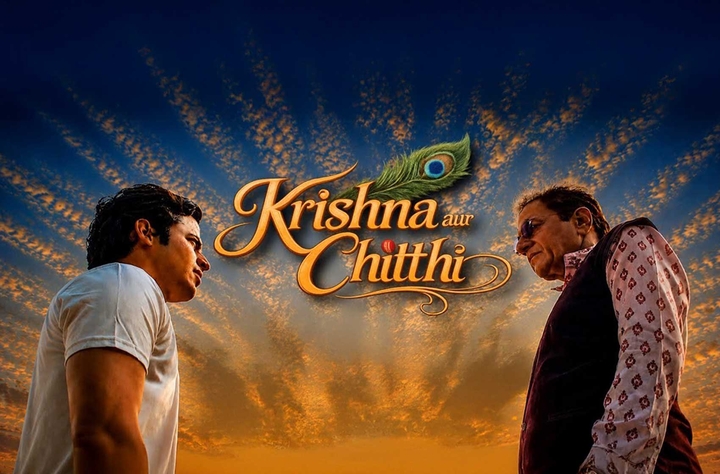
Krishna Aur Chitthi (2026) Movie Review: A Soulful Convergence of Faith, Destiny, and Cricket
In an era where mainstream Hindi cinema frequently relies on high-octane action sequences, heavy visual effects, and massive production budgets, Krishna Aur Chitthi (2026) arrives as a deliberate counter-narrative. Directed by the duo of Vinaay Bhhardwaj and Saumitra Singh, this poignant sports drama strips away the usual commercial distractions to deliver something increasingly rare in modern Bollywood: an emotionally grounded narrative driven entirely by character, conviction, and pure human sentiment. Released on May 29, 2026, Krishna Aur Chitthi positions itself as an unconventional blend of competitive sports drama, spiritual discovery, and a touching homage to the profound human relationship with the divine.
The Core Technicalities: Production and Cast Overview
Before diving deep into the thematic architecture of the film, a look at the fundamental credits demonstrates a calculated assembly of underutilized talent alongside legendary veterans.
| Attribute | Details |
| Title | Krishna Aur Chitthi |
| Release Date | May 29, 2026 |
| Language | Hindi |
| Genre | Sports / Emotional Drama |
| Runtime | 2 Hours 1 Minute (121 Minutes) |
| Certification | U (Universal) |
| Directors | Vinaay Bhhardwaj, Saumitra Singh |
| Producers | Vinaay Bhhardwaj, Ravina Thhakur |
| Screenplay & Story | Rajnish Mishra, Ranjeet Mashiana |
| Lead Cast | Darsheel Safary, Arun Govil, Sajjad Delafrooz, Mir Sarwar |
| Music Director | Puneet Dixit |
| Lyricist | Sanjay Masoom |
| Playback Singer | Sonu Nigam |
Full Plot Synopsis: One Game, One Destiny
The narrative architecture of Krishna Aur Chitthi focuses on Arjun (played by Darsheel Safary), a deeply passionate young man from a modest background whose life is fundamentally defined by two forces: an insatiable love for the game of cricket and an innocent, unyielding spiritual faith. Arjun is not an ordinary athlete looking for mere commercial success or fame; to him, the cricket pitch is a sanctuary where destiny is forged.
Arjun’s journey is nurtured under the watchful and spiritually grounding presence of Panditji (Arun Govil). Rather than teaching conventional religious dogma, Panditji acts as a bridge between the physical realities of Arjun’s struggles and his internal universe. He encourages the boy to view his trials not as obstacles, but as letters or conversations with the divine. The central narrative device of the film introduces a profound real-life parallel—paying an explicit tribute to an iconic real-world moment involving Sachin Tendulkar. This thematic tether explores what happens when a young boy decides to bypass the noise of the world and write a literal letter (“Chitthi”) to Lord Krishna during his moments of deepest professional and personal despair.
The conflict arises from both systemic and interpersonal challenges. Arjun faces immense pressure from local socio-political elements, embodied by the calculating MLA Iqbal Quereshi (Sajjad Delafrooz). Quereshi views local sports infrastructure and regional talent purely through the lens of political leverage and exploitation. Alongside the strict, hard-nosed systemic obstacles presented by figures like Khalid (Mir Sarwar), Arjun finds himself completely isolated.
When the local sporting bodies turn their backs on him and personal tragedy strikes his small household, Arjun reaches a breaking point. Instead of succumbing to cynicism, he pours his raw, filterless grief into a letter addressed to the Lord of the Universe. The secondary half of the film systematically details the ripples caused by this absolute act of surrender. It is a slow, intensely emotional journey where cricket matches become a literal battlefield of destiny, examining whether the response to a child’s unfiltered faith is a tangible miracle or an awakening of the human spirit.
Detailed Critique: Deconstructing the Creative Elements
Themes: The Intersect of Bhakti and Athletic Grit
The primary triumph of Krishna Aur Chitthi lies in how seamlessly it bridges two worlds that are usually kept separate in cinema: contemporary sports and traditional Indian Bhakti (devotion). The screenplay avoids turning the film into a preachy religious lecture or an overly stylized sports anthem. Instead, it positions faith as a psychological mechanism for resilience. When Arjun steps up to the crease, his batsmanship is presented as an extension of his meditation. The film cleverly uses cricket as a metaphor for life—where one must face unpredictable deliveries, unfair umpires, and hostile fields, relying entirely on inner stillness to survive.
Acting: Darsheel Safary’s Maturity and Arun Govil’s Grace
Darsheel Safary delivers what can easily be called his most nuanced and mature performance since his breakout debut as a child actor nearly two decades ago. As Arjun, Safary balances the aggressive, calculated fire required of a modern batsman with the vulnerable, tear-eyed innocence of a young man seeking cosmic answers. His performance anchors the emotional weight of the second act, especially during the long, wordless sequences where he interacts with the letters.
Arun Govil, universally revered for his historical depictions of divinity on Indian television, brings an effortless aura of serenity to Panditji. Govil avoids melodramatic posturing, opting for gentle smiles and a grounded vocal delivery that makes his philosophical insights feel earned rather than forced.
The casting of Arun Govil is a stroke of meta-narrative genius; his very presence instantly signals a legacy of spiritual calm to the audience, allowing the film to cut through exposition and establish immediate emotional trust.
Sajjad Delafrooz delivers a menacingly quiet performance as MLA Iqbal Quereshi, avoiding the cartoonish, loud tropes typically assigned to Bollywood political antagonists. Mir Sarwar provides excellent support as Khalid, embodying the cold, unyielding rigidity of an institution that tests Arjun’s patience and talent.
Direction and Visuals: A Minimalistic Aesthetic
Directors Vinaay Bhhardwaj and Saumitra Singh exhibit admirable restraint. In a sports drama, there is always a temptation to overuse slow-motion tracking shots, hyper-stylized color grading, and explosive crowd noises. The directorial duo rejects this approach. Working closely with cinematographer Hemant Gulshan Chouhan, they frame the rural cricket grounds and ancient temples with natural, earthy tones. The lighting mimics the soft transitions of dawn and dusk, which reinforces the spiritual undercurrent of the movie. The sports sequences are shot cleanly, emphasizing the mechanical precision of the game and the physical toll it takes on Arjun.
Sound and Screenplay: Melodies of Absolute Devotion
The auditory landscape of Krishna Aur Chitthi is one of its absolute highlights. Composer Puneet Dixit crafts a background score that shifts elegantly between tense, rhythmic percussion during the cricket matches and minimalist, string-heavy melodies during the emotional intervals. The presence of veteran playback singer Sonu Nigam elevates the soundtrack significantly. Nigam’s vocals, paired with the spiritually resonant lyrics of Sanjay Masoom, bring an ethereal depth to the film. The songs function not as narrative interruptions, but as extensions of Arjun’s internal monologues.
The screenplay by Rajnish Mishra and Ranjeet Mashiana maintains a steady, deliberate pace. While it occasionally slows down a bit too much in the middle of the second act, it ensures that every major emotional payoff in the climax feels structurally justified.
Strengths and Weaknesses
Strengths
-
Original Thematic Fusion: A refreshing narrative blend that uniquely fuses the structural beats of an underdog sports story with the deep emotional resonance of spiritual faith.
-
Powerhouse Performances: Strong, grounded portrayals by Darsheel Safary and veteran actor Arun Govil that keep the film emotionally centered.
-
Exceptional Sound Design: A stellar musical score highlighted by Puneet Dixit’s compositions and Sonu Nigam’s evocative playback vocals.
-
Avoidance of Melodrama: The direction consistently avoids turning genuine spiritual themes into loud, commercialized melodrama.
Weaknesses
-
Pacing Issues: The transition period between the initial setup of the conflict and the arrival of the climax features a few pacing dips where the narrative loops slightly.
-
Niche Appeal: Audiences looking for high-octane, hyper-commercialized sports action or fast-paced thrillers may find the film’s philosophical meditations a bit too patient.
Final Verdict
Krishna Aur Chitthi (2026) is a triumph of honest, emotionally clear filmmaking. Vinaay Bhhardwaj and Saumitra Singh have successfully crafted a movie that honors the cultural devotion of India while presenting a compelling athletic narrative. Fueled by Darsheel Safary’s excellent performance and a beautifully rendered soundtrack, it stands as a poignant reminder that sometimes the most powerful stories are those told with quiet sincerity. It is a highly recommended cinematic experience for families and anyone seeking an inspiring, soul-stirring drama.
Final Rating: 4.2 / 5 stars
Review Schema
The following structured data represents the review breakdown for Krishna Aur Chitthi (2026):
-
Movie Title: Krishna Aur Chitthi
-
Director(s): Vinaay Bhhardwaj, Saumitra Singh
-
Reviewer: Film Critic Division
-
Date of Publication: June 6, 2026
-
Star Rating: 4.2 out of 5
-
Target Audience Rating: Universal (U-Certified)
-
Key Keywords for Search: Krishna Aur Chitthi 2026, Krishna Aur Chitthi Review, Darsheel Safary movie, Arun Govil 2026, Hindi sports drama movie, Vinaay Bhhardwaj film.